Dear Friend,
If you'd like to fill your calendar with sales conversations without renting your outbound software every month for the rest of your life, this may be the most exciting message you read all year.
I'm dead serious. Stick with me for five minutes and I'll prove it.
My name is Alex Serand. I've built outbound for 21 B2B companies and generated more than $12M in revenue for them. I've set up the stacks. I've cleaned the lists at midnight with cold coffee. I've written sequences that booked meetings like crazy and sequences that flopped so hard I still wince.
And I've paid the bills. Oh boy, have I paid the bills.
Here's my confession. For most of those years, I had no idea what any of it actually cost me.
The incredible bill nobody adds up
Do me a favor. Open your card statement right now. Go ahead, I'll wait.
Find every charge that exists only so you can send cold email.
A lead database. An email verifier. A sending tool. Warmup. A couple of extra mailboxes. And the credits you panic-bought on a Thursday afternoon because you ran dry halfway through a campaign.
None of them looks scary on its own. $39 here. $97 there.
That's EXACTLY how it gets you.
I call it the outbound tax. It's what you pay every month for the right to send email, before you get a single reply.
Here's what that looks like with real numbers. A sending tool like Instantly runs about $1,047 a year at list price. Smartlead runs about $1,128. That's ONE tool. No data. No verifier. No second seat.
Sending tools at list price, before data, verification or a second seat.
Keep it three years and you've handed over more than $3,000.
And the day you stop paying? You own nothing. Zip. Zero. Nada.
But here's the part that really makes my blood boil. That tax doesn't stay put.
It goes UP.
Starting at $9.90. Paid once. Never billed again.
The 5 “great ideas” that make it worse
When outbound gets expensive or messy, smart people reach for one of five fixes. I've tried every last one. Each one works… sort of. And each one quietly jacks up the tax.
Great Idea #1Build your own stack.
Leads from one tool. Verification from another. Sending from a third. Warmup from a fourth. And a spreadsheet holding the whole Frankenstein together with duct tape and prayer.
It works. It's also five bills, five logins, and an afternoon every week dragging CSV files from tab to tab. And guess who gets stuck doing that? Usually the one person on the team who should be out selling.
A guy who builds outbound software said it better than I ever could: “The hidden cost nobody mentions: operator time.”
Great Idea #2Pay for credits.
Credit-based data tools are powerful. I won't pretend they're not.
But credits run out at the worst possible moment: halfway through the one campaign that's finally working. So you stop. Or you pay up. Again.
Go read the reviews. You'll see the same lines over and over. “The credit is too much.” “Keep an eye on your credit usage.”
That's not a sales tool, friend. That's a parking meter.
Great Idea #3Upgrade to an all-in-one.
One tool instead of five. Fewer tabs. That part's real, and it's nice.
But look closely at the pricing page. Still monthly. Still capped on contacts, or mailboxes, or sends. Still charging you per seat. You didn't escape the tax. You just stuffed it into one bigger bill. One reviewer called it “misleading pricing costing me $600+ a year.”
Great Idea #4Hire an agency.
Now somebody else does the work. I totally get the appeal.
But you just swapped a subscription for a retainer. And when you leave? The domains, the warmed-up mailboxes and the list often stay right where they are. With the agency. You're not renting tools anymore. You're renting the whole operation.
Great Idea #5Hire an SDR. Or an AI one.
A human SDR is a full salary before the first meeting is booked, and months before they're any good.
An AI SDR costs less than a salary. It's also usually the most expensive subscription in the whole stack. And it sends under YOUR name, which is the exact thing that keeps you up at night. One buyer nailed it in five words: “Everyone can tell it's automated.”
Five great ideas. Every single one keeps you paying every month. Most of them make you pay MORE.
Why your bill grows when you do
Now pay close attention, because this next part is the whole ballgame.
Most outreach software makes its money from monthly recurring revenue. The pricing is built to grow with you. More contacts? More credits. More mailboxes? Higher tier. New hire? New seat.
So think about this for a second. The exact moment your outbound starts working, when you want to send more, reach more people and bring on some help, is the exact moment your bill jumps.
You get punished for winning.
Isn't that incredible?
How it quietly strangles your pipeline
Here's how this plays out. I've watched it happen to teams I've worked with. Heck, I've done it myself.
First, you send less, to save credits.
Then you skip verifying a list, because the verifier is one more line item. A few hundred dead addresses go out. Bounces climb. Your domain takes a beating. Emails that used to land in the inbox start landing in spam.
Replies dry up. You decide cold email “doesn't work anymore.” You cancel. You go back to sitting around waiting on referrals.
The tool didn't fail you. The pricing did. It made doing outbound the right way too expensive to keep doing.
So I asked a dumb question
What if you just paid for it ONCE?
Now, I'd looked at lifetime deals before. Most of them are junk. The company vanishes in a year. The data is stale. The caps are so tight the thing is useless. Or it does one job, so you still need the other four tools.
I wanted the whole enchilada. Leads, verification, sending, follow-ups and replies. One place. Paid once.
It took a while. Then a friend sent me a link with one line: “Look at the price.”
It was an amazing little tool called Sendsets.
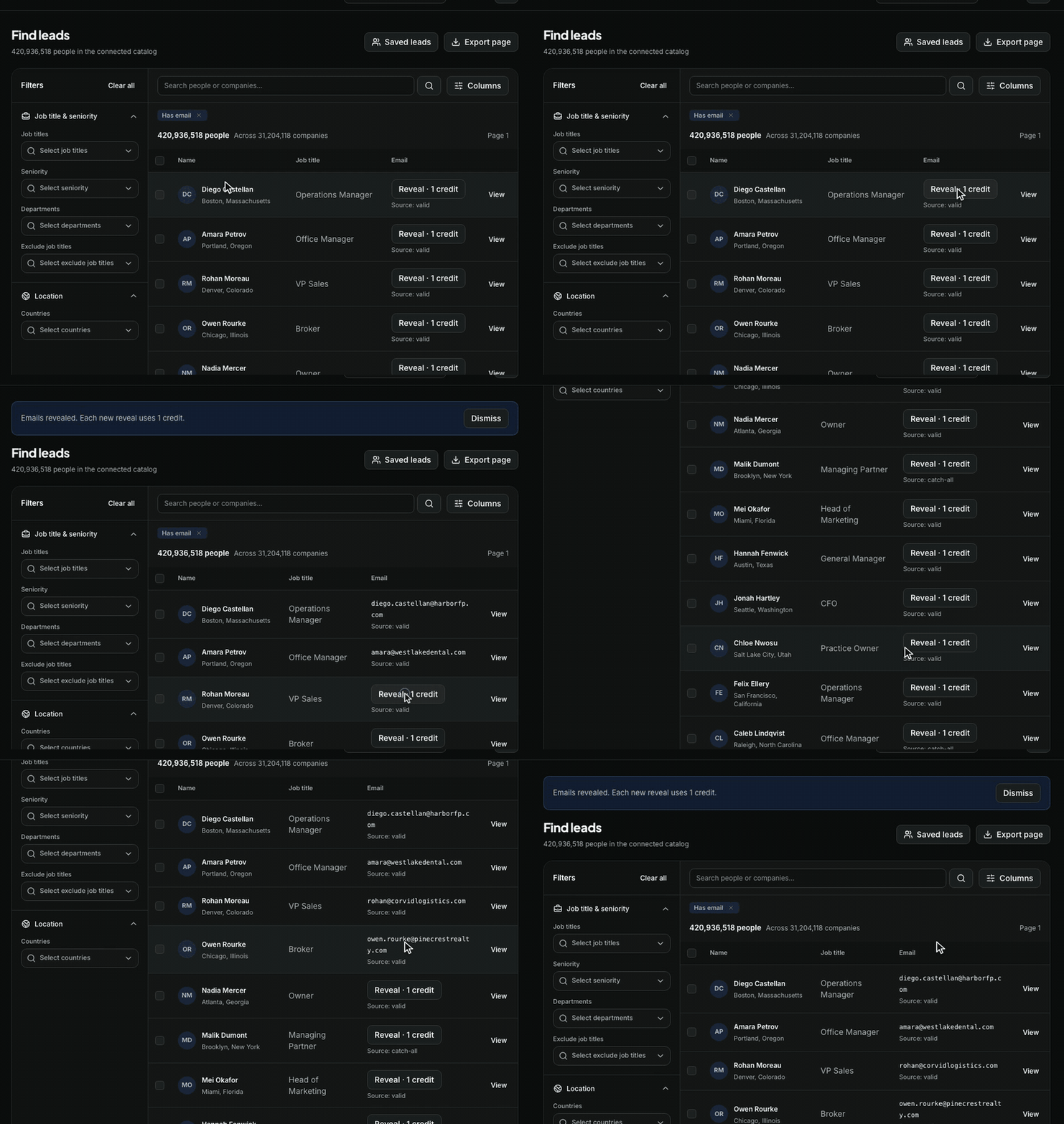
You paste your website. It figures out what you sell and who buys it. It pulls verified contacts from a great big database of 420M+ business contacts. It checks every single address against the mail server. It drafts your emails. And it sends them from your own mailboxes.
Starting at $9.90.
ONCE.
I didn't believe it either. So let me show you exactly how it works.
Lifetime spots are limited on every plan.
How this incredible little tool works
Three steps. Most people send their first campaign in about 20 minutes.
- 1
Step 1: Paste your website.
Sendsets reads your site and fills in what you sell. Then it suggests the buyers worth going after. No 14-field ICP worksheet. You paste a URL. Done.
Sendsets works out who buys what you sell. - 2
Step 2: Pick who to email.
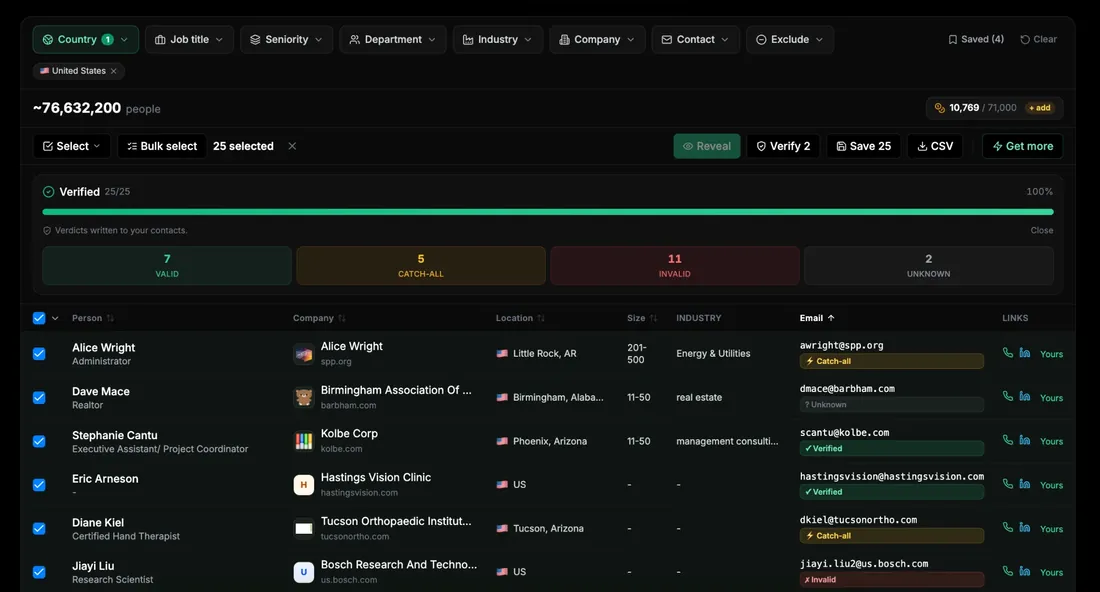
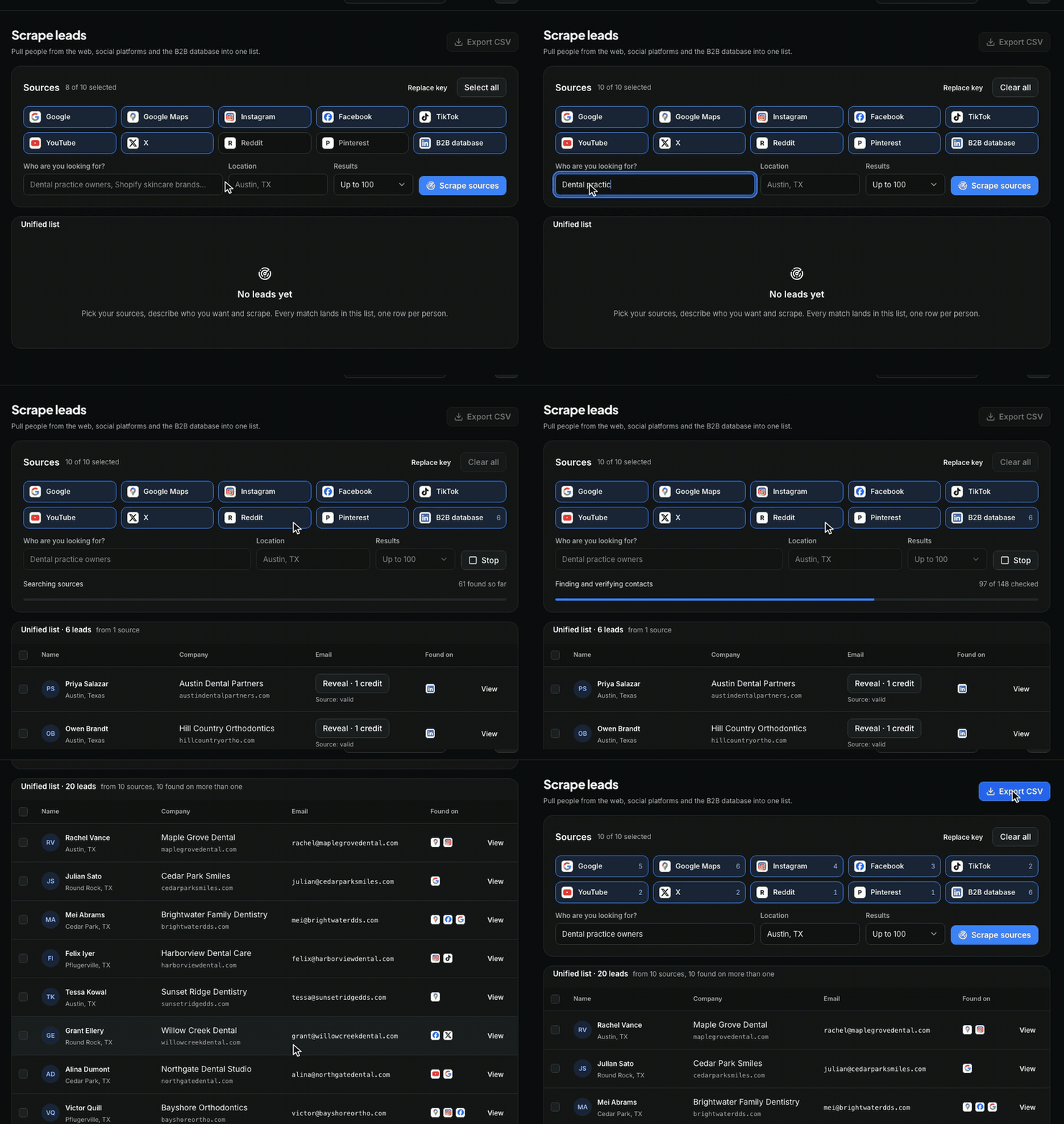
It pulls matching companies and contacts from 420M+ business contacts across 31 million companies. Need more? It can scrape fresh leads from 10 sources, including LinkedIn, Google Maps, Instagram and company websites, and merge them all into one clean list.
You tick the people you want. Skip the ones you don't.
Filter by title, seniority, industry and location, then tick who you want. - 3
Step 3: Launch.
AI writes the first draft of your emails. You read them. You fix anything that doesn't sound like you. You pick which mailboxes to send from. And you hit go.
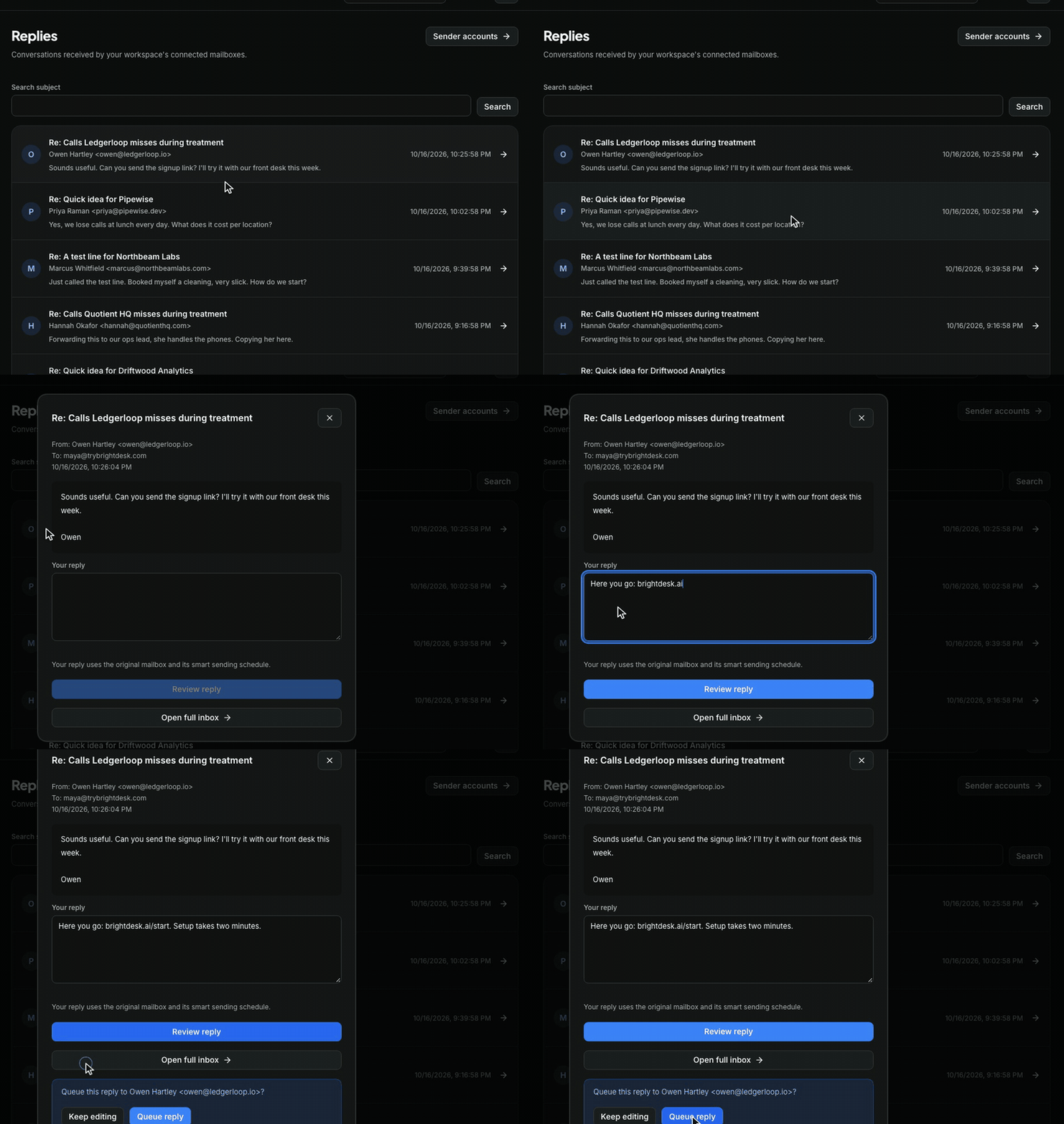
Follow-ups go out on schedule. Every reply, from every mailbox, lands in one inbox.
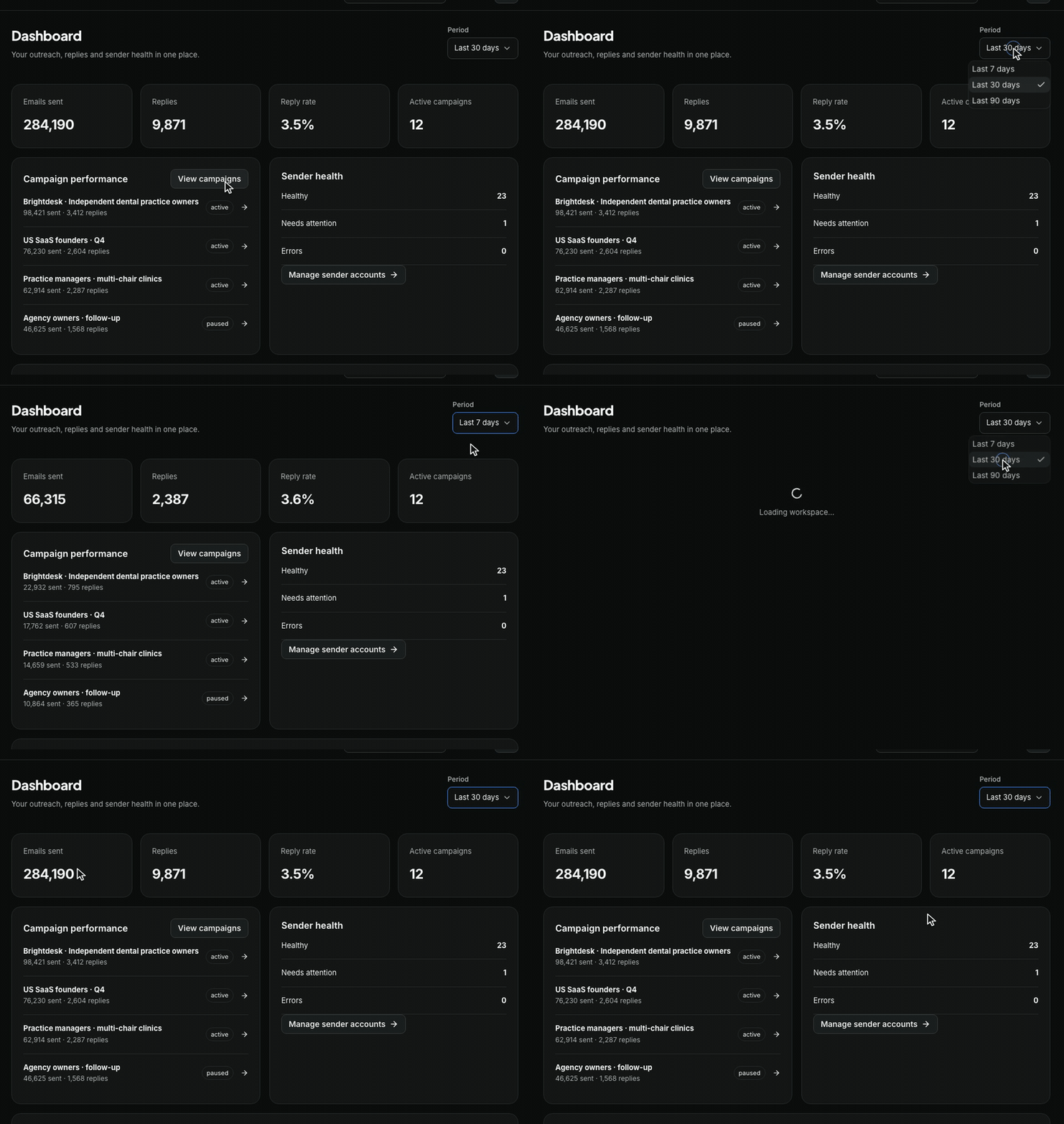
Sends, replies and sender health on one dashboard.
That's it! No CSVs. No five tabs. No 11pm list cleanup.
“Sure, but are the leads any good?”
Great question. You SHOULD be suspicious. Cheap data is how domains get burned.
So here's what happens to every single lead before it gets anywhere near your campaign. Sendsets checks it against the recipient's mail server. It looks at the MX records and the SMTP response. It flags disposable addresses and catch-all domains. Dead addresses get yanked before they can bounce.
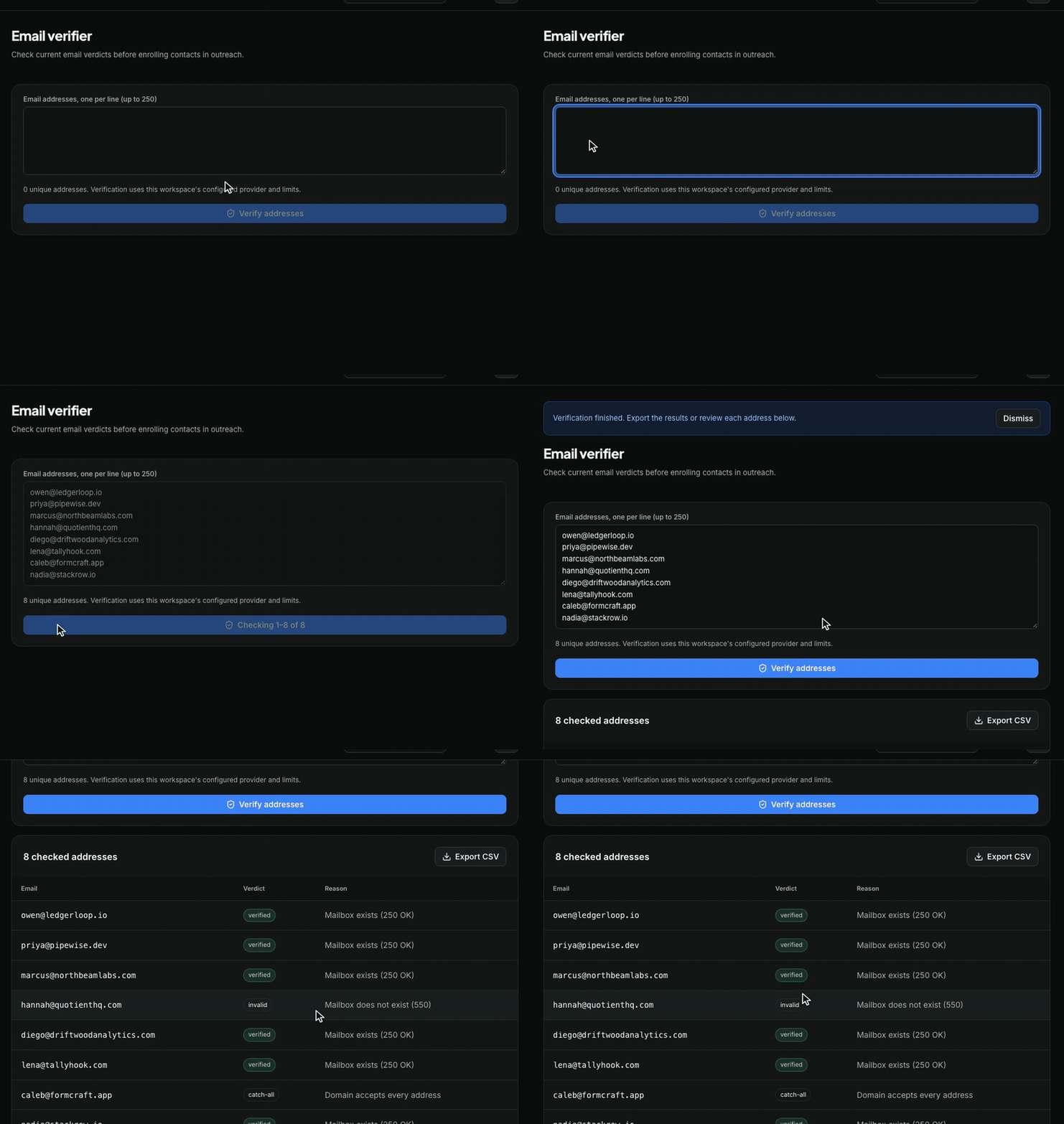
Each lead comes with 54 data fields. Not a name and a guess. Fifty-four.
And on the sending side, warmup and sender rotation are built right in. Your volume gets spread across your mailboxes instead of hammering one until it breaks.
Carlos V., a sales lead at a Series B company, put it like this:
I sent 300 emails on day one. By week 2 I had a closed deal. The verification alone is worth it.
Carlos V., Sales Lead, Series B
What people are saying
More than 2,400 people use Sendsets. It's rated 4.8 on G2 and 4.0 on Trustpilot across 224 reviews.
And that 4.0 tells you something great: the reviews are real. Nobody fakes a 4.0.
Here's what a few of them said:
Replaced Apollo + Instantly + a CRM with one tool. Saved $400/mo and paid for itself in the first week.
Sophie L., Outbound Lead
Replaced Apollo overnight. Reply rate went from 2% to 14% in week one.
Natasha B., Founder, B2B SaaS
47 demos booked in 30 days. I used to pay $300/mo for half this.
James O., Head of Growth, Agency
Set up my first campaign in under 20 minutes. Got a reply the same day.
Amara N., Freelancer
Now let me be straight with you. Your results depend on your offer, your list and your emails. No tool on earth fixes an offer nobody wants. But if yours already sells, the thing standing between you and more conversations is usually volume and consistency. And THAT is the part Sendsets handles.
Starting at $9.90. Paid once. Never billed again.
Now, here's the catch
I promised you one. Here it is.
Sendsets doesn't send from its own servers. You connect your own mailboxes: Gmail, Microsoft, or any SMTP provider. Higher plans also work with Resend, Amazon SES, SendGrid, Mailgun and Postmark.
Don't have mailboxes set up? You can add a ready-to-send pack at checkout. That costs extra.
Honestly? I'd rather have it this way. Your mailboxes and domains are your reputation. I don't want them living inside somebody else's software where I can't touch them.
The other catch: the lifetime price is limited. Each plan has a fixed number of lifetime spots. When they're gone, the plan goes back to its regular price. Period.
So that's the trade. You bring your own inboxes, and you grab a spot while they're left. In return, you never pay the outbound tax again.
Side by side
Here's how it stacks up against the five “great ideas”: